Timing belt fitted

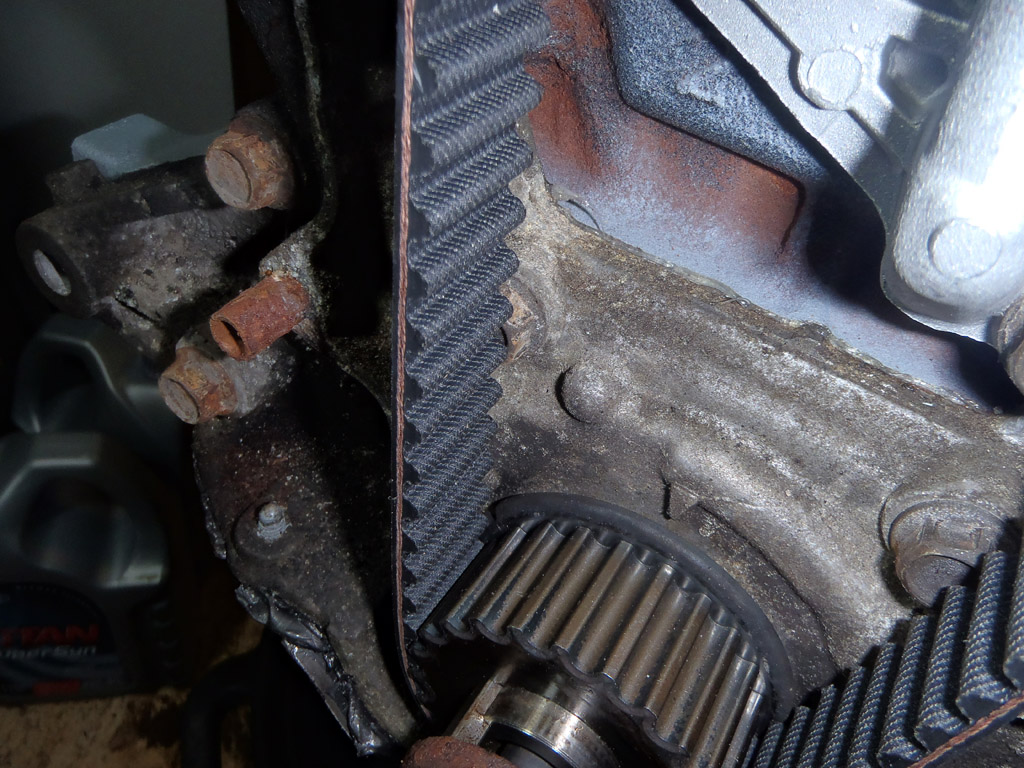
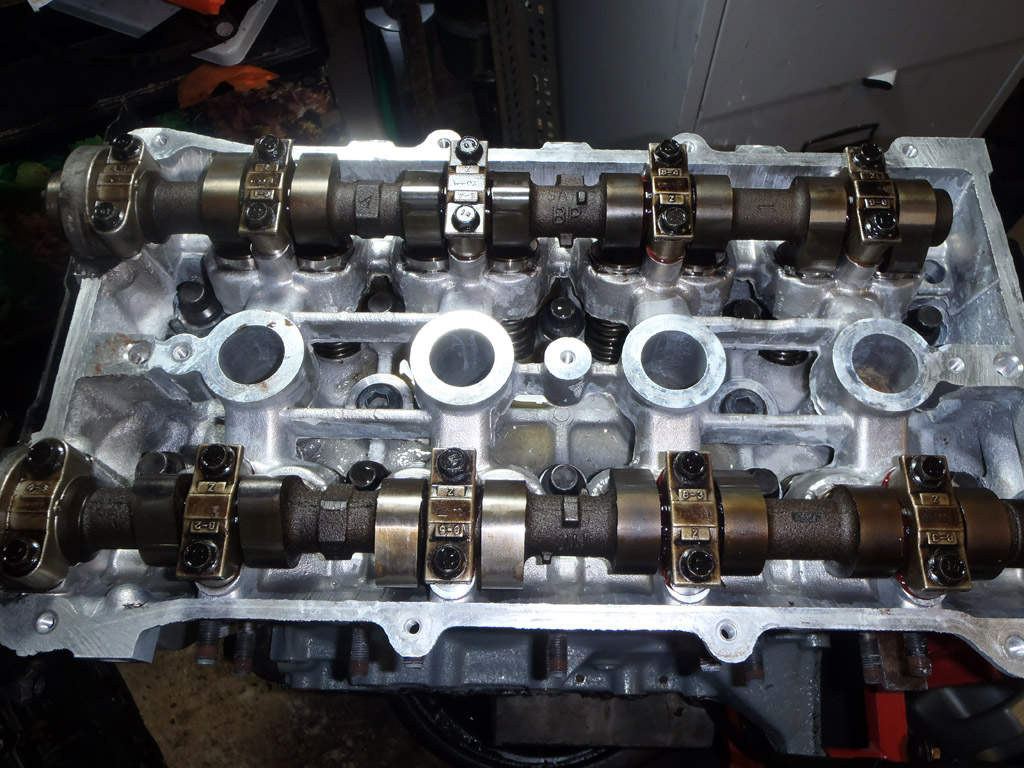
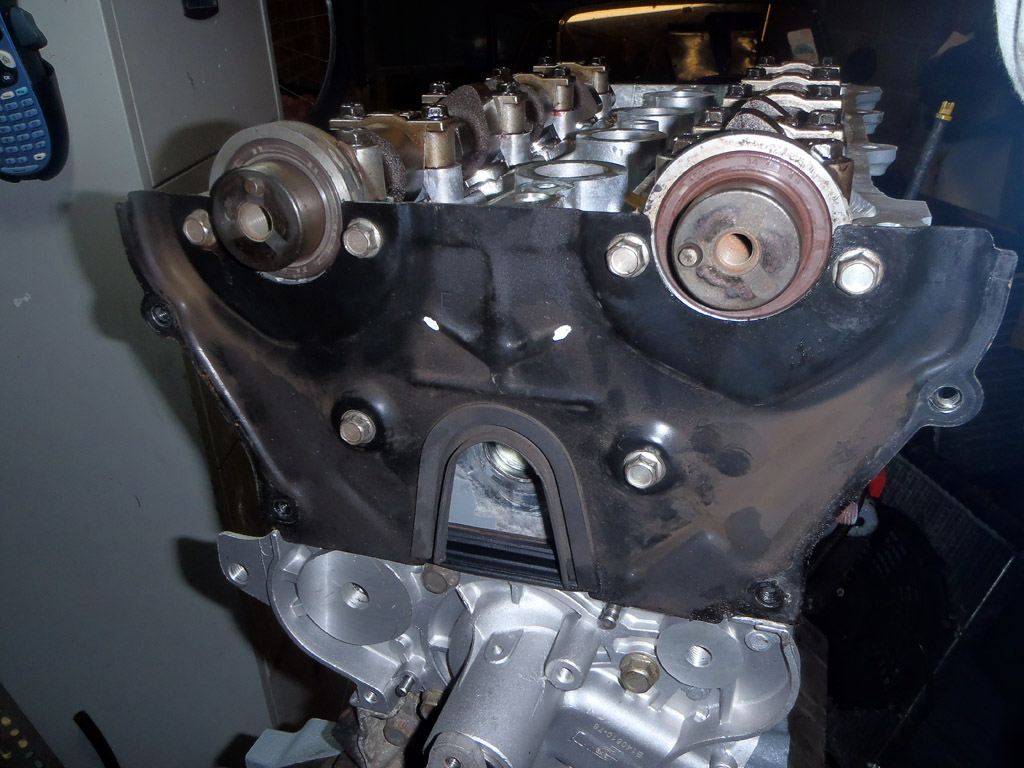
Managed to sneak an hour in the garage and amongst other things for the timing belt installed. Started off by getting the crank at the TDC mark:

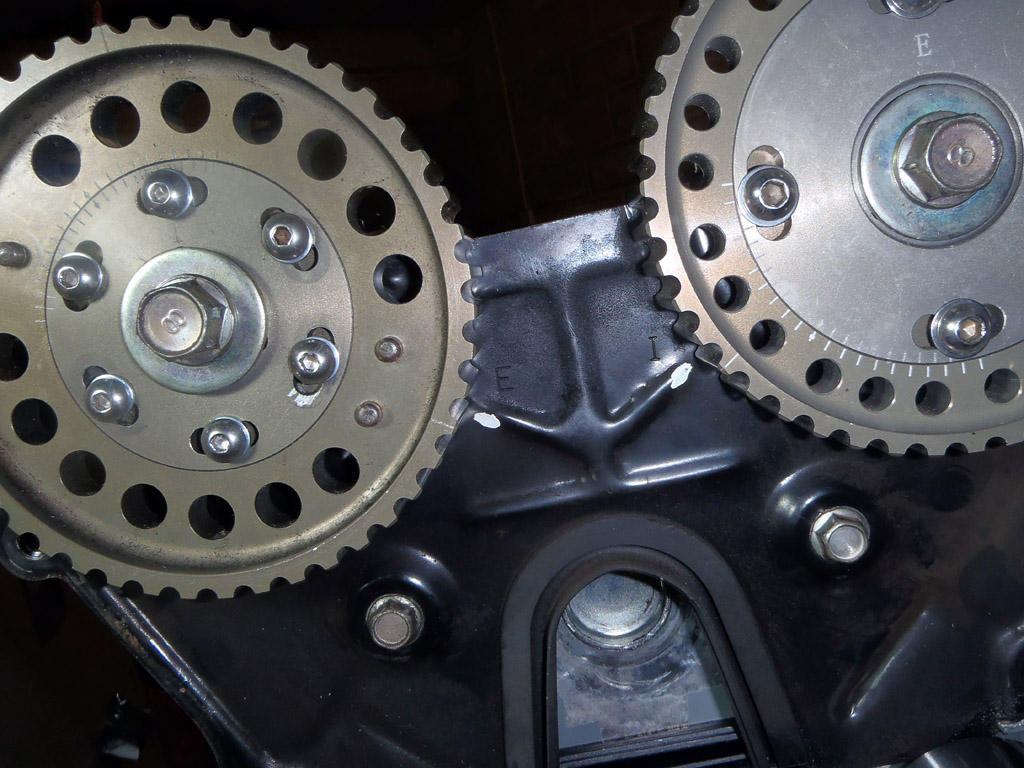
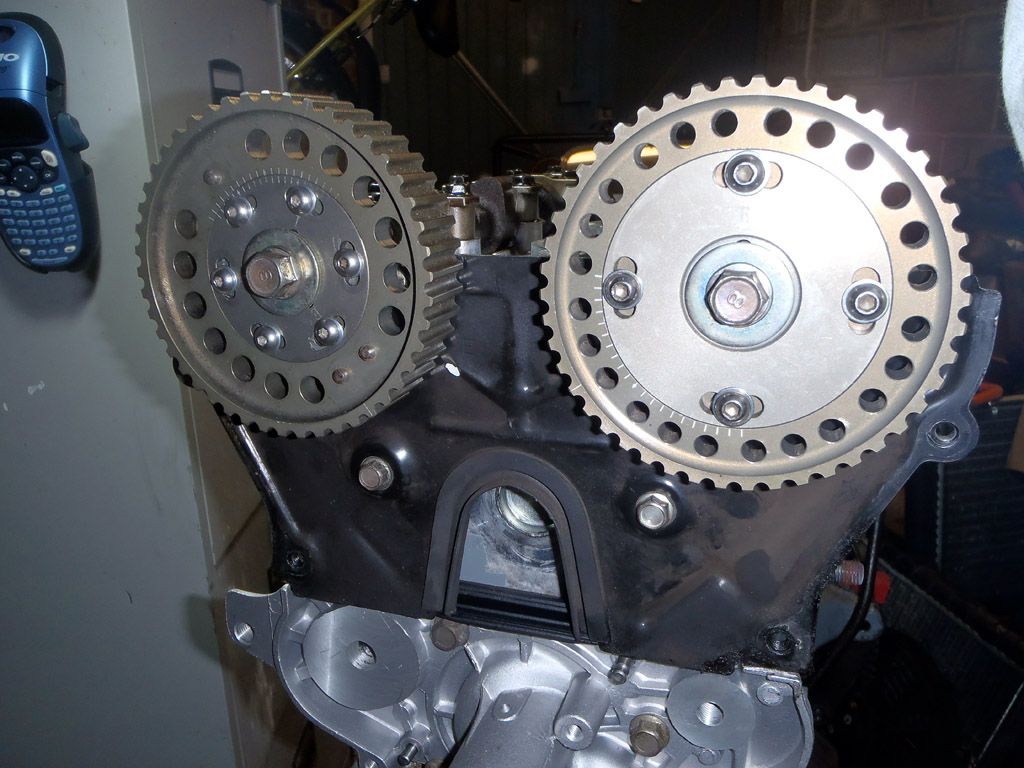
Then align the cam pulleys to their marks on the seal plate:

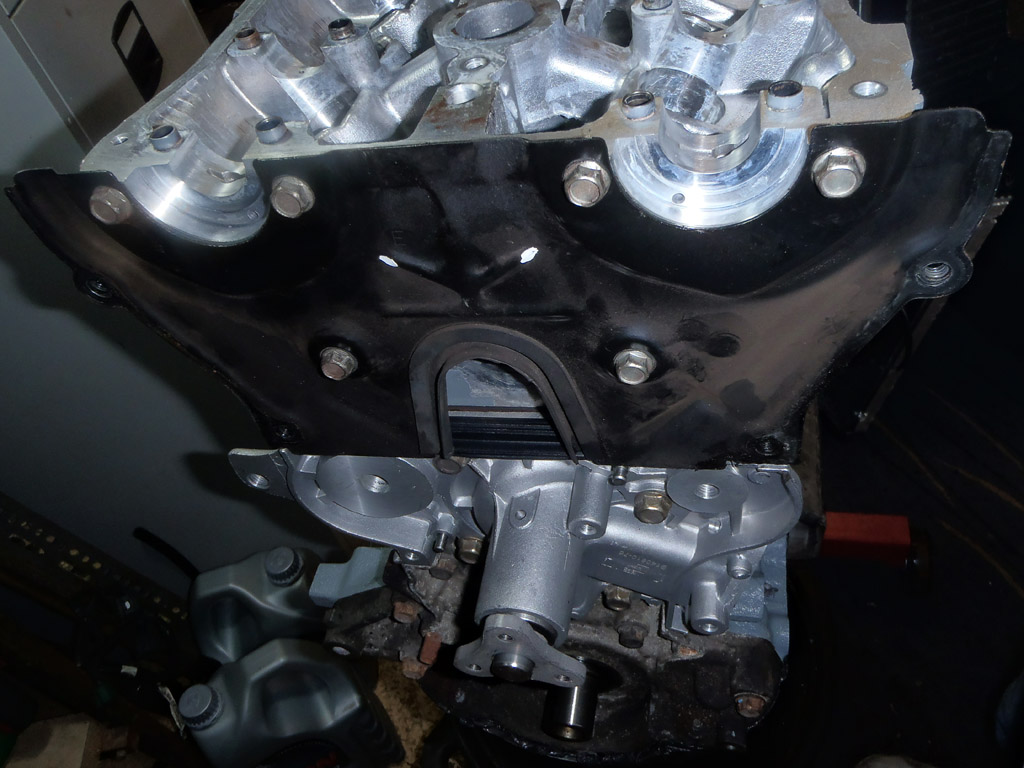
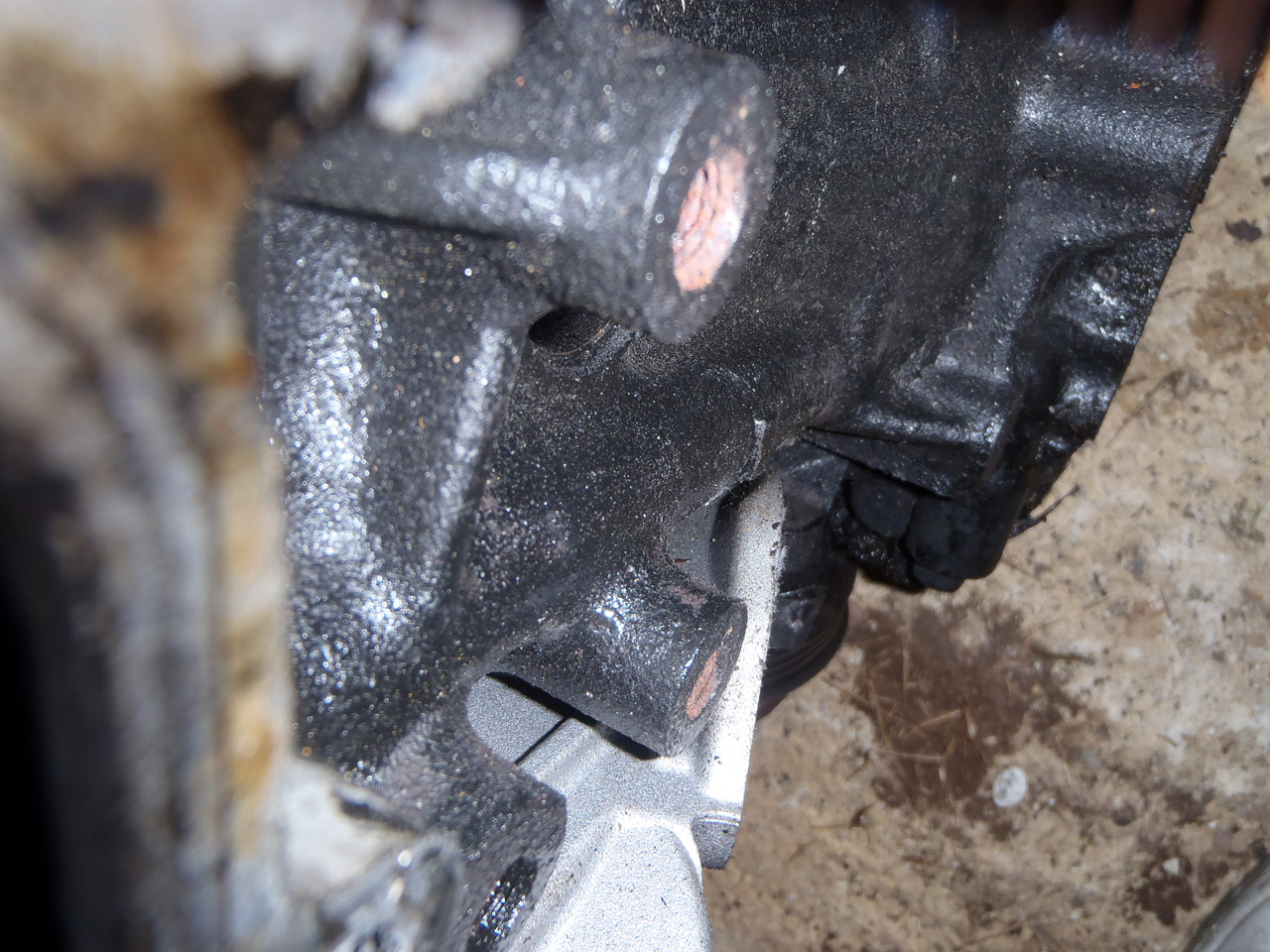
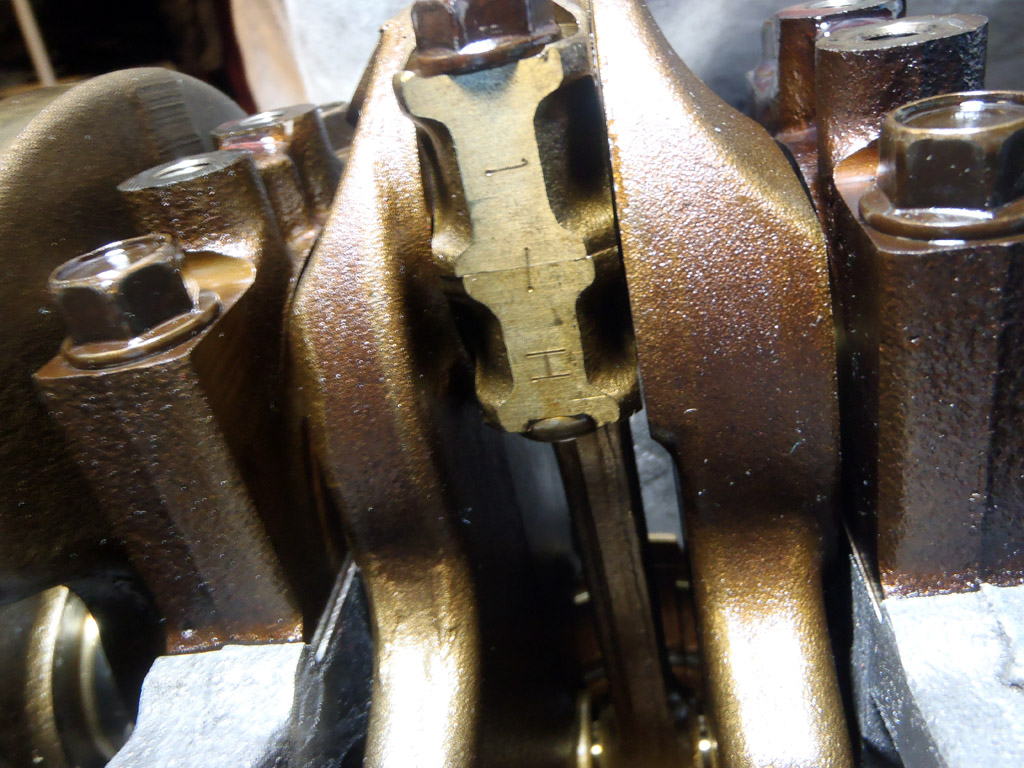
And fit the belt, keeping it as tight as possible between the two pulleys. Once fitted, rotate the crank through four revolutions and check the marks still line up. Thankfully they did (though I’ve never had them not line up so don’t know what the chances of it being out are). The tensioner pulley bolt was loosened to allow the spring to tension the belt, then torqued back up again. You then rotate the crank 1 5/6ths around until it’s aligned with another mark on the oil pump that you can just see in this photo.

You then measure the deflection between the two cam pulleys. No more than 9mm with a 10kg weight. That was fine… so that was it, one timed engine.

I’ll double check everything with dial gauges and the such, just in case the adjustable pulleys need tweaking. That will do for now though.

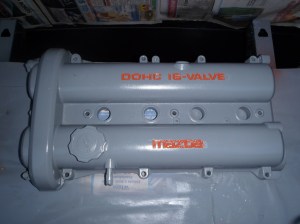
In the mean time, I’ve finished painting the cam cover.

Next up, the crank and water pump pulleys. In the meantime, I’ve ordered the silicone joiners for the throttle bodies, along with some spare coolant, vacuum and fuel hose.

Posted in Performance upgrades | 2 Comments

Head built

With the head repainted, I built it back up this weekend. First job was to check whether I’d get away with not lapping the valves or not. There’s a fair chance I would seeing as the faces were untouched and the valves were going back in their original position. The easiest way to tell is to fill the combustion chamber with petrol and see if it leaks. I refitted some spark plugs then dropped in the valves.
Looks like they were all fine apart from cylinder 3. Then I noticed one of the valves wasn’t quite closed. I pushed it in a bit further and tried again.
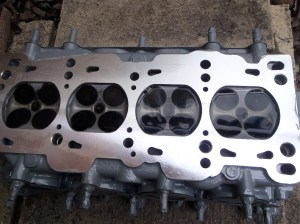
Much better. It didn’t evaporate off as quick as I’d hoped but after sniffing all that I didn’t really care. I cleaned it back up then started work on the valve seals. The valve seals differ for inlet and exhaust. The inlet valve seals are grey and have one (or no) ridges. The exhaust are grey or green (handily green in my case) and have two ridges. The ridges are on the top.
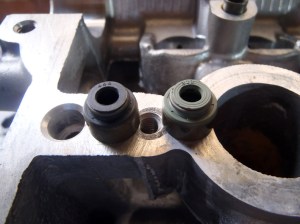
Inlet on left, exhaust on right

Inlet on left, exhaust on right

Easy to fit, just not so easy to fit correctly. You push them on with your finger then occasionally have to push them straight. Most of the time they go on straight to start off with.

With the seals in, the next job was the fiddly repetitive task of fitting the valves. The start of it is easy, wipe the stem with an oily cloth, push it into its home, fit the washer that goes at the bottom of the spring, then the spring, then the retaining cap. Then, break out the valve compressor and compress them so you can fit the collets.

It’s the collets that are less than fun. I followed the same trick as in the Rod’s manual but I understand there are tools you can get to help you. This trick was to apply a small blob of grease to the inside of the collet, then stick it to a small screwdriver with another blob of grease and have a game of operation. Eventually, you’ll get them in the right place and you can (carefully) release the compressor. I gave each one a tap with a hammer to ensure they were planning on staying put.

Repeat 15 times…

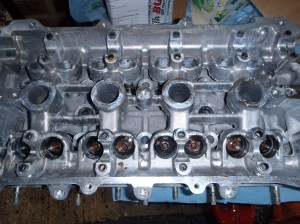
I’d managed to get the inlets done before I ran out of time on Saturday, then finished the exhaust valves off this morning.
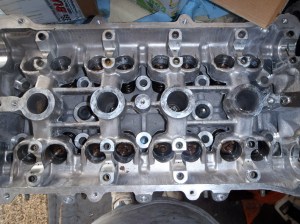
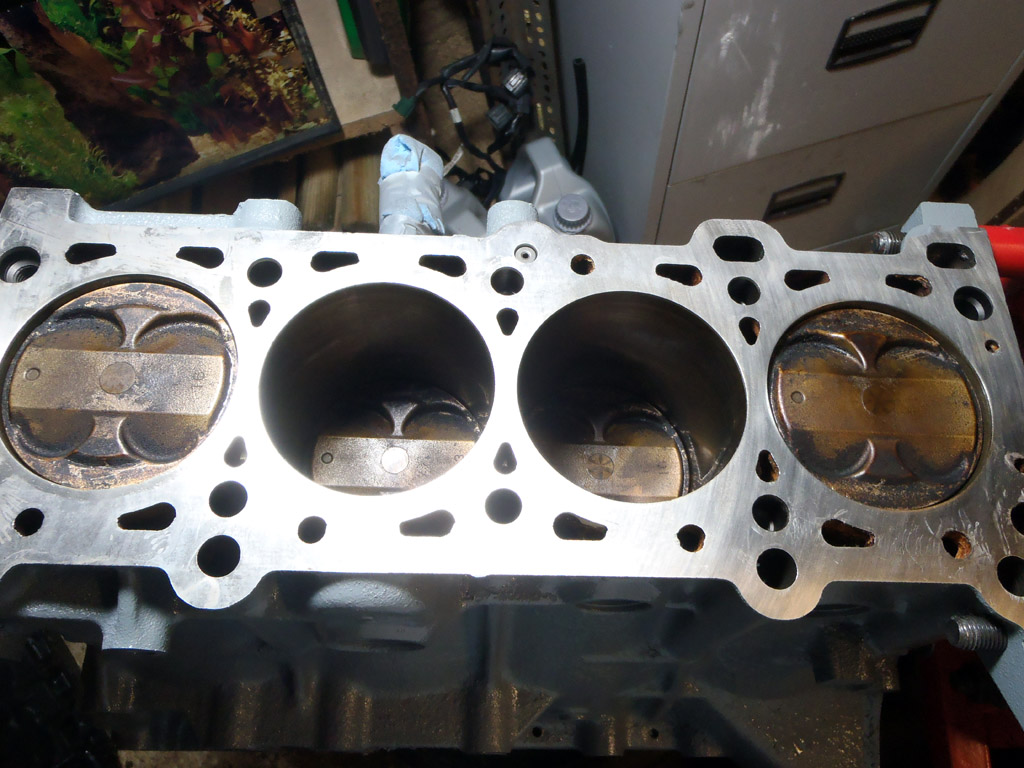
So, ready to refit the head. The manual said to ensure the pistons were halfway in their bores and to oil the faces and bores liberally. I fear this may not have been what they had in mind! At least I don’t have to worry about blue smoke on start up – got the perfect excuse for that now.
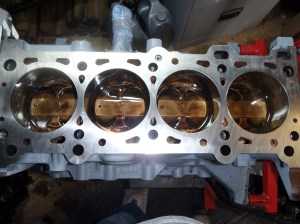
The head gasket was next, making sure it was the right way round. I’m using a genuine gasket for this, just for piece of mind.
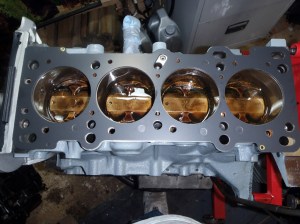
I bolted the head on with new bolts. The manual then called for fitting the front thermostat housing. Well I’ve no need for that, so I did a job I wanted to do with the mk1 engine and fitted a core plug instead.

Then fitted the front plate, which now wasn’t really sealing much!

Whilst doing this yesterday and today I’d been painting the cam cover. With the grey paint now dry I needed to mask it off to do the orange lettering. I adopted a very professional masking approach.

Basically I covered the lettering with masking tape, cut the letters out, then cut two rectangles out of a sheet of newspaper and used that to mask the rest of the cam cover.

Back to the head. I again liberally oiled up the cam follower housing and refitted the lifters, in the same positions they had come from. I used some assembly lube on the bearings – this stuff wasn’t quite as messy as the stuff I’d used on the bottom end.

Then the cams went in along with the bearing caps.

New cam seals. Not intentionally different colours, just bought at different times from different suppliers – bits I’d picked up for the mk1 engine and just never gotten around to fitting.
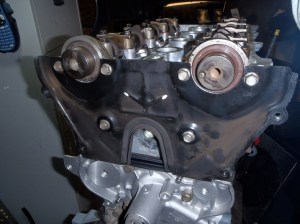
Pulleys next, making sure they were aligned as per the ones that came off. I fitted the adjustable pulleys that I’d picked up a couple of years ago. These have the pickups on the inlet pulley for the mk2 cam sensor, thankfully.

Lastly, the timing belt tensioner, idler pulley and crank pulley went on (not torqued up, not ready for that yet, obviously). I still think I probably should have cleaned the oil pump up a bit, but it will be covered, some of it. It just contrasts massively with the new water pump.
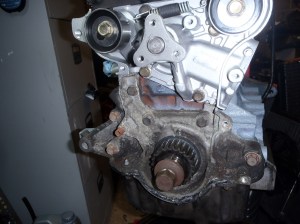
And all of a sudden, it’s an engine again. It kind of reminds me of the Westfield build where you’d put lots of time in, seemingly get nowhere then suddenly have something that resembles a car.

Timing belt next. I’ll use the OEM marks for now, then fine tune it with a set of gauges. No doubt the rolling road operator will retune it of course.

I had also finished the orange coats for the cam cover, so removed the masking before the paint totally dried. I had visions of removing the masking and the paint coming with it otherwise. I don’t really want to repaint any more parts! Lacquer still to go but I’m quite pleased with how it’s turned out. I think it looks better than black and orange did.
Posted in Performance upgrades | Leave a comment

Waterpump fitment issues

Unfortunately the paint didn’t stick to the head and flaked off. I jetwashed the paint off re-painted, using etch primer this time.

Whilst waiting for it to dry, I tackled the waterpump. Immediately, I had an issue where the inlet seemed to foul the block. I wasn’t sure if I was torqueing the pump against the face of the block or against the inlet flange/block.

I checked the pump on the original engine (that I was just going to re-use), and this had a relief cut out in that area.

I checked the original waterpump from the mk2.5 engine and this had the same relief. That was (presumably) a genuine Mazda waterpump, but the one I fitted to the mk1 engine was aftermarket. This one without the relief was also aftermarket, so I presume they hadn’t bothered with the relief to save on costs. Maybe it is ok, but I’m not happy with it so am returning it.

I picked up a replacement from my local motor factors and it was fine.

Replacement pump at bottom

Replacement pump at bottom

Posted in Performance upgrades, Problems | Leave a comment

Oil seals and sump done

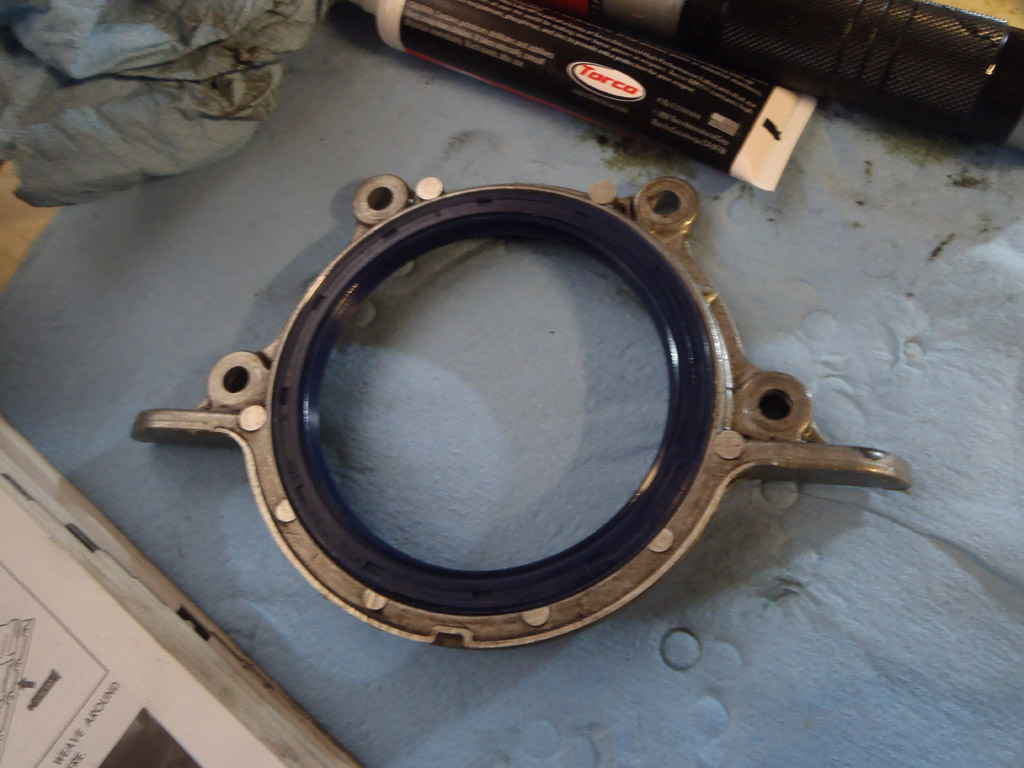
With the crank and pistons/rods in, I could finish off the block, or at least the ‘internals’ of it. First up was the rear oil seal. The manual said to mount it in a vice like so (there are sticky out bits underneath that it’s lightly gripping in this photo):

However, I found it easier to close the vice a bit more and have it sitting on top. Using a drift, the old seal should be hammered out. It put up quite a fight, but eventually let go of the housing.

The new seal is then lubed (including the housing) and lightly tapped in with a nylon/rubber mallet

OLYMPUS DIGITAL CAMERA

The inside of the seal is lubed along with the crank, and the housing bolted in. A small line of silicone sealant is applied to the housing first.

OLYMPUS DIGITAL CAMERA

It’s a similar story with the oil pump… new seal, small line of silicone sealant on the body and it too is bolted up.

After this, things get a bit time critical. You apply a bead of silicone sealant to the windage tray, pop that onto the block, fit the pick up tray, apply silicone sealant to the front and rear half moons, fit the rubber gaskets, then apply silicone sealant to the sump and bolt it all together. All this needs to be done in 5-10 minutes to stop the sealant forming a skin.

It was a bit tricky. After placing the sump on top I noticed that it had a locating dowel in it… and so did the block. I had to remove the sump, punch out the dowel then refit it. In this time, the windage tray moved so it wasn’t lining up with the wholes. Careful application of swear words sorted that and the sump was fitted in the end.

Unfortunately I used a bit too much sealant, though it’s better than using too little. I’ll tidy these bits up once it’s dried.

The manual says to fit the flywheel and water pump next. I’ll save the flywheel until later though as it’s not particularly easy to fit in this engine stand (it might be now I’ve spaced the engine away a bit). I also need to order a new water pump seeing as I’ll not be re-using the mk1 one as planned.

Next will probably be starting the rebuild of the head then.


Posted in Performance upgrades | Leave a comment

Crank and pistons in

Spent some time in the garage this morning after the F1 qualifying. Feeling that early start now! First up I retrieved the mk1 windage tray from the original engine and fitted the MSBP in its place. I’ve decided not to modify my sump, but instead I’ll see if I can find someone to modify the mk2 sump. Modifying my sump will no doubt end in leaks!

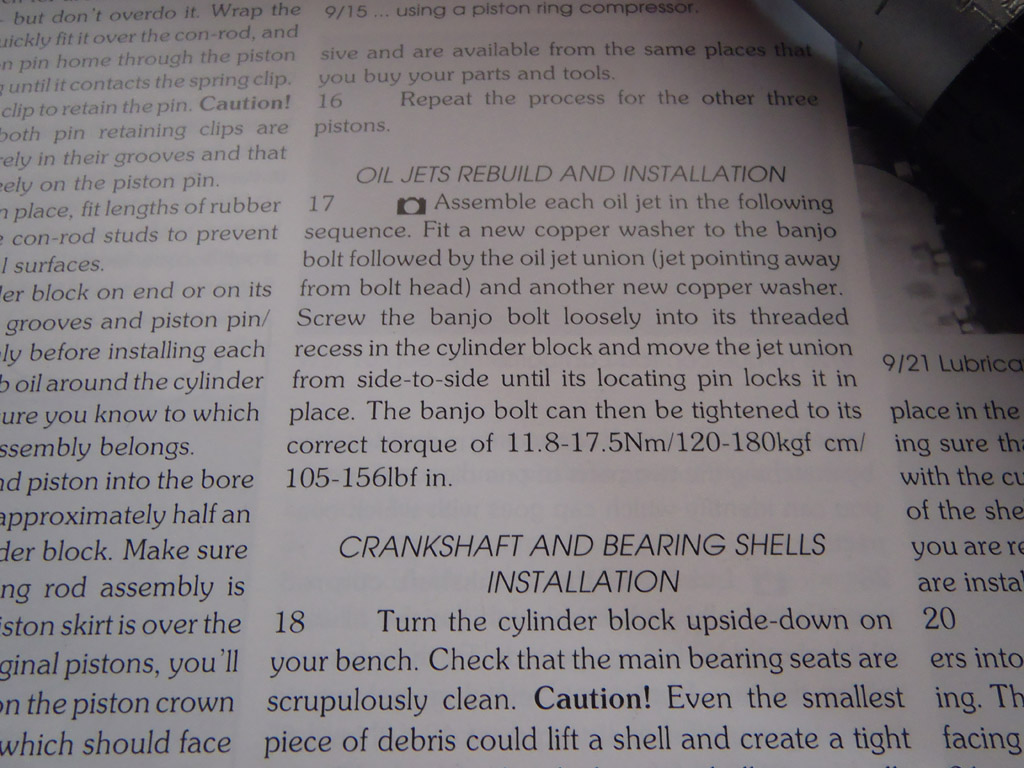
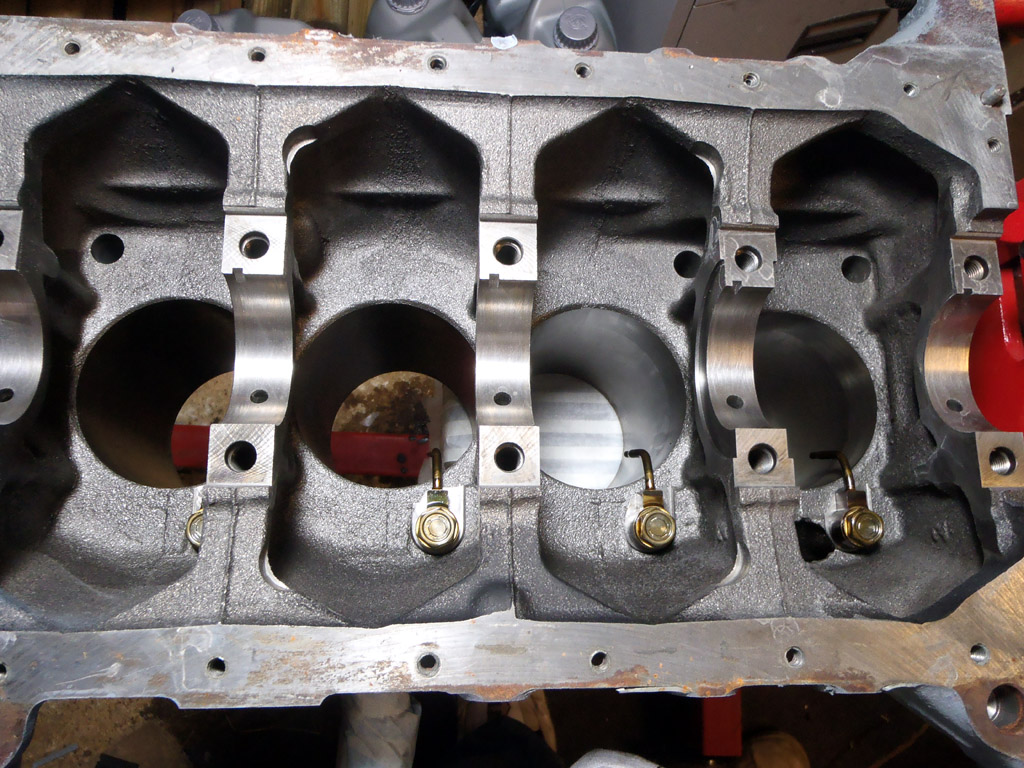
After this, I removed the engine from the stand and attached the new bare block in its place. First for refitting were the piston oil squirters. I dug out the bag with these in and cleaned them up, testing the ball/spring in each one. I fitted them, done them up finger tight then went looking for the torque settings. I’m glad I thought about it, for a long time I was reading the Rod’s manual wrong!

I usually work in lb/ft and was reading the 105-156 value as this. The keen eyed will spot that’s in lb/in but I didn’t. Fortunately, I thought that was far too tight for something internal to the engine, and checked the Nm value on my torque wrench instead. That was much more sensible, and the squirters were duly torqued up. The fitment of dirty oily things into my nice clean engine had begun…

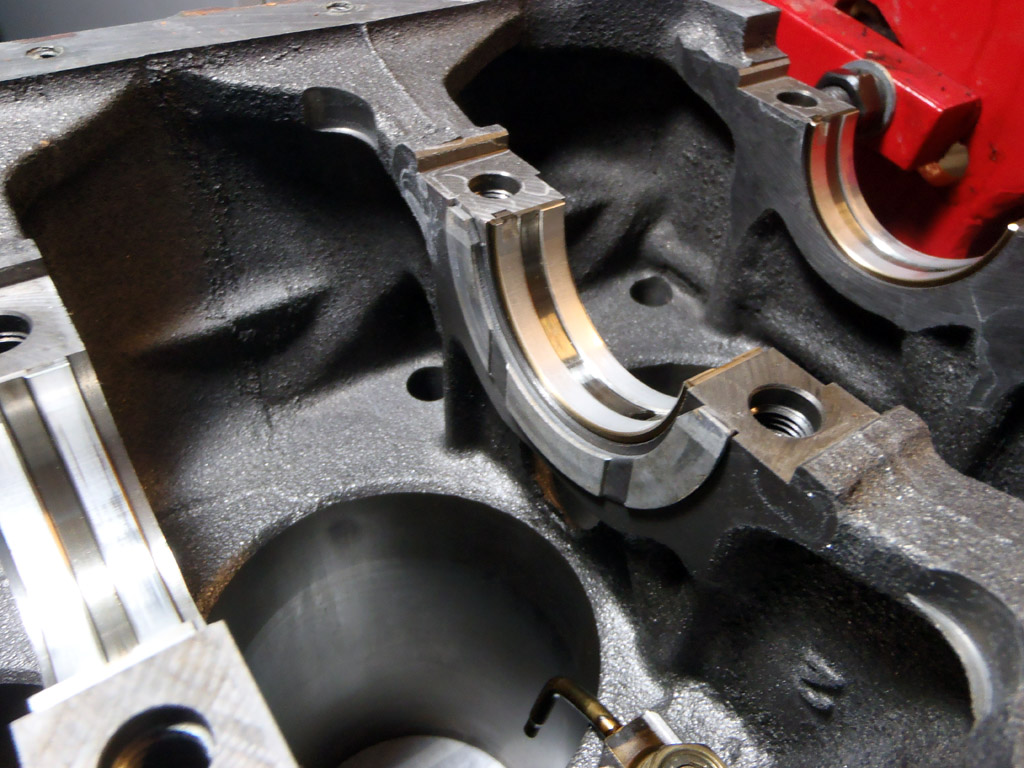
Next up were the mains bearings. I panicked a little when I saw I’d put all five in one bag, but then remembered I’d written on them to say which ones they were.

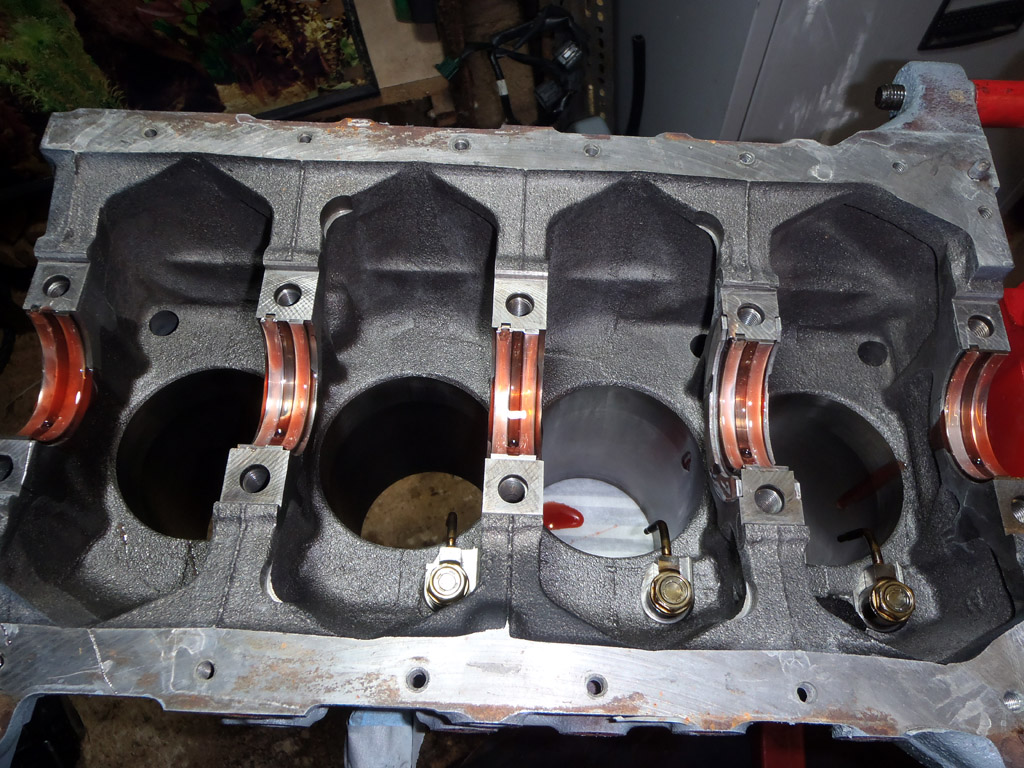
One by one I cleaned them up and fitted them into the block. Next was the thrust washers which I’d forgotten to remove during disassembly. Thankfully the machinist had spotted that for me and kept them to one side.

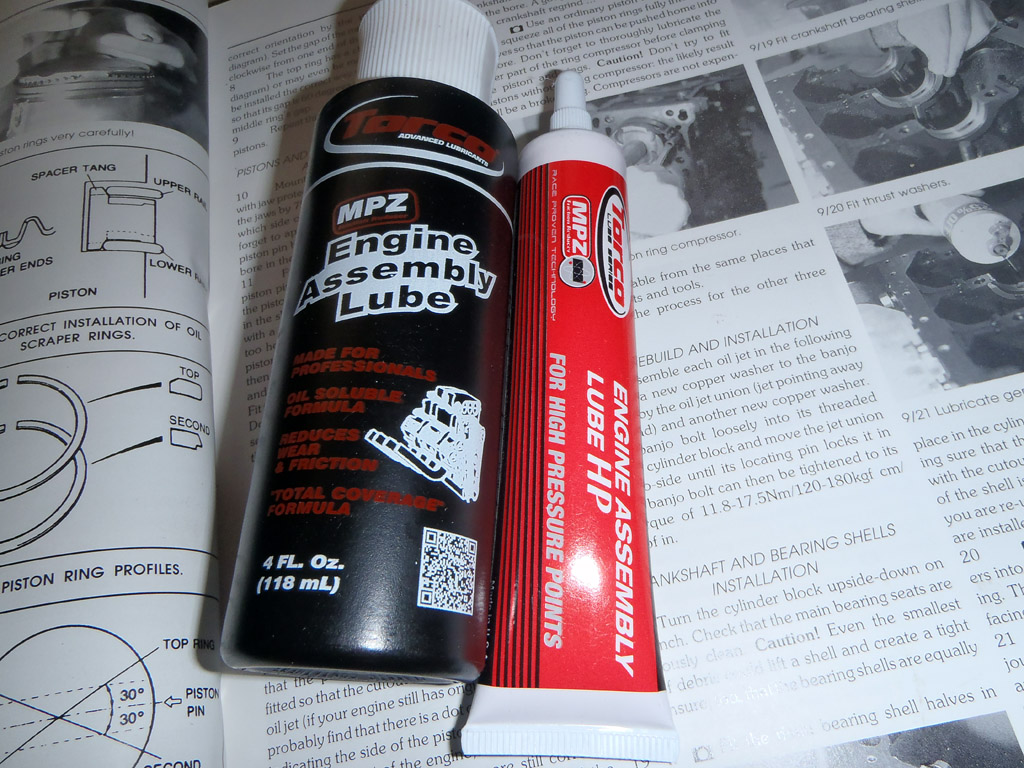
Before sitting the crank in, I applied some assembly lube. I’m using Torco MPZ products from Burton Power.

I used a bit too much, but it’s better than too little.

Of course, I’d soon learn how messy this stuff is. It’s quite sticky, more like a red treacle, but I guess that’s to ensure it stays in place until the oil comes along.

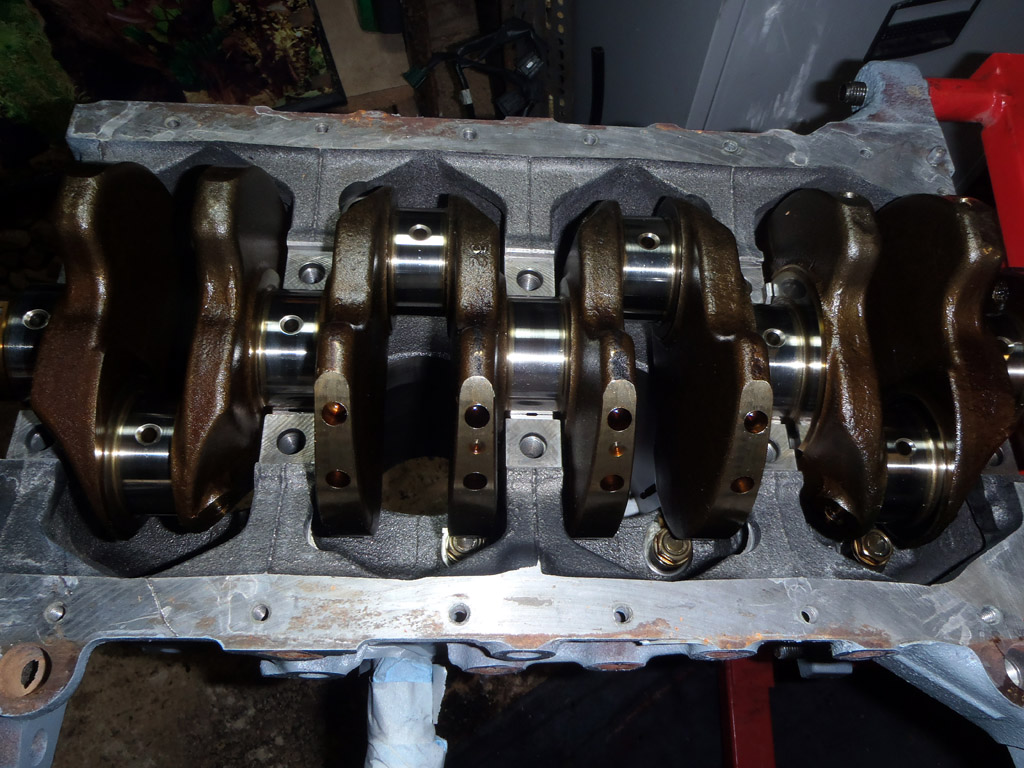
With a mess suitably made, I placed the crank back in (after lubing that up too).

Then, I dug out the caps and fitted them.

The crank rotated nice and freely so it seems I’ve passed the first test. That was it for now, but I managed to steal some more time in the garage this evening and refit the pistons/rods.

First off, I oiled up all of the bores and the piston ring compressor tool. Then, I took a piston, gave it a cursory clean to remove the loose carbon build up and lubed up the bearing.

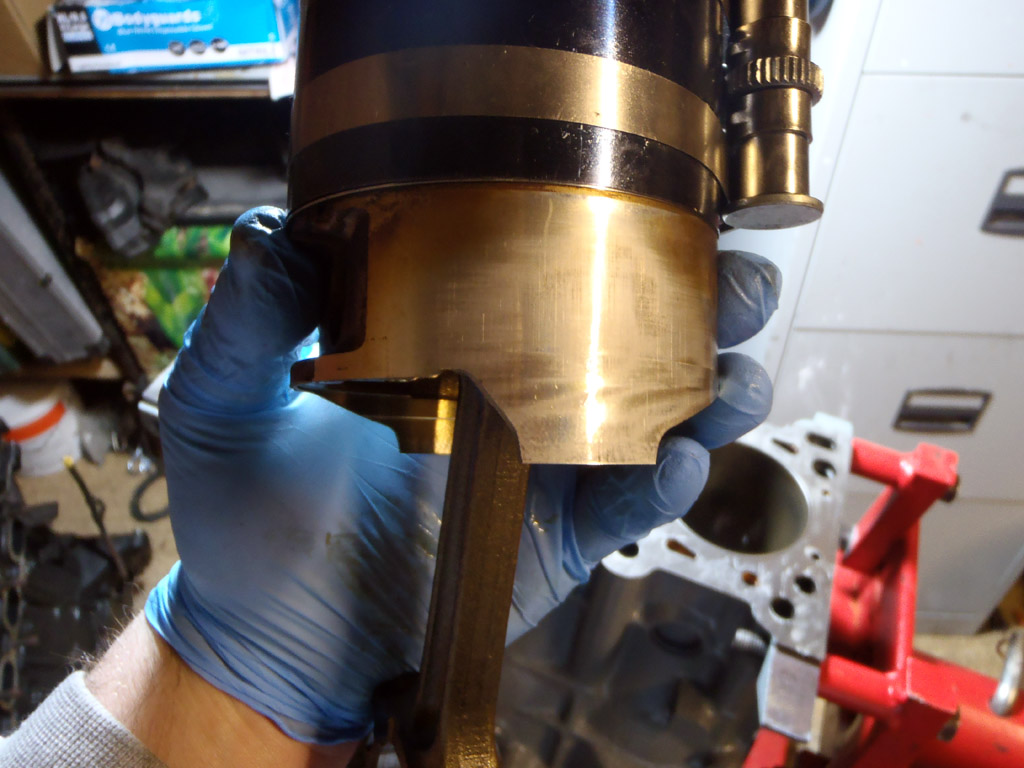
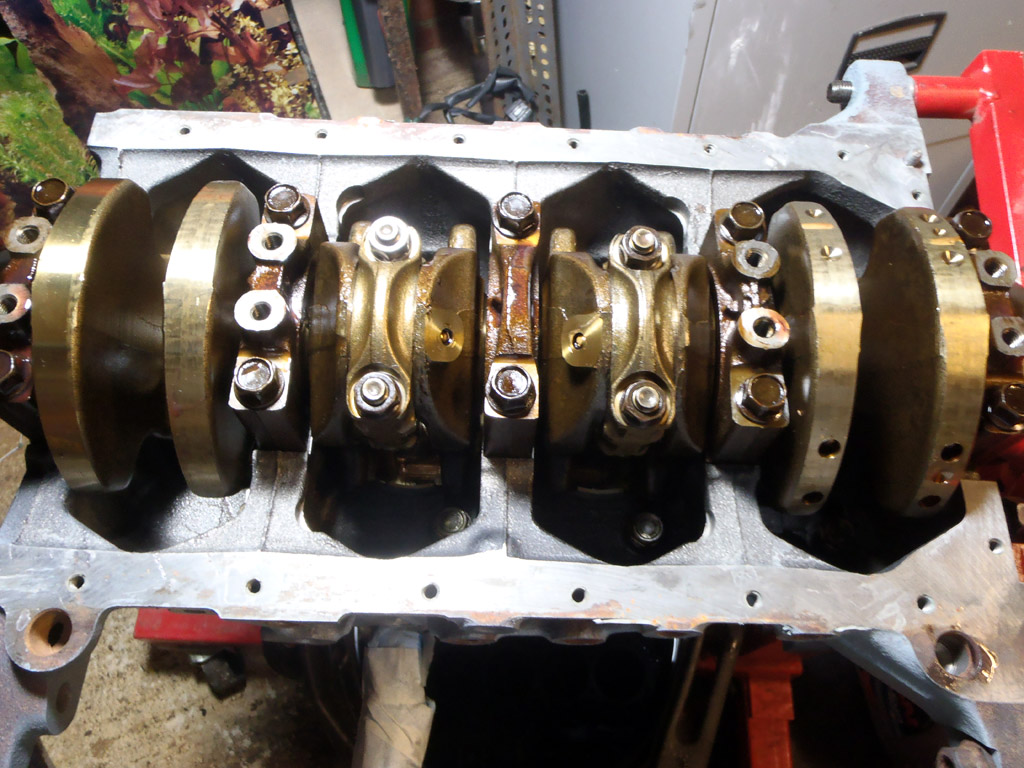
To refit, you first need to compress the piston rings (else they’re not going to go back into the bores, at least intact. I’ve lifted the compressor slightly in this photo to show the cut out for the oil squirter on the piston. You need to ensure this is aligned with the squirter itself.

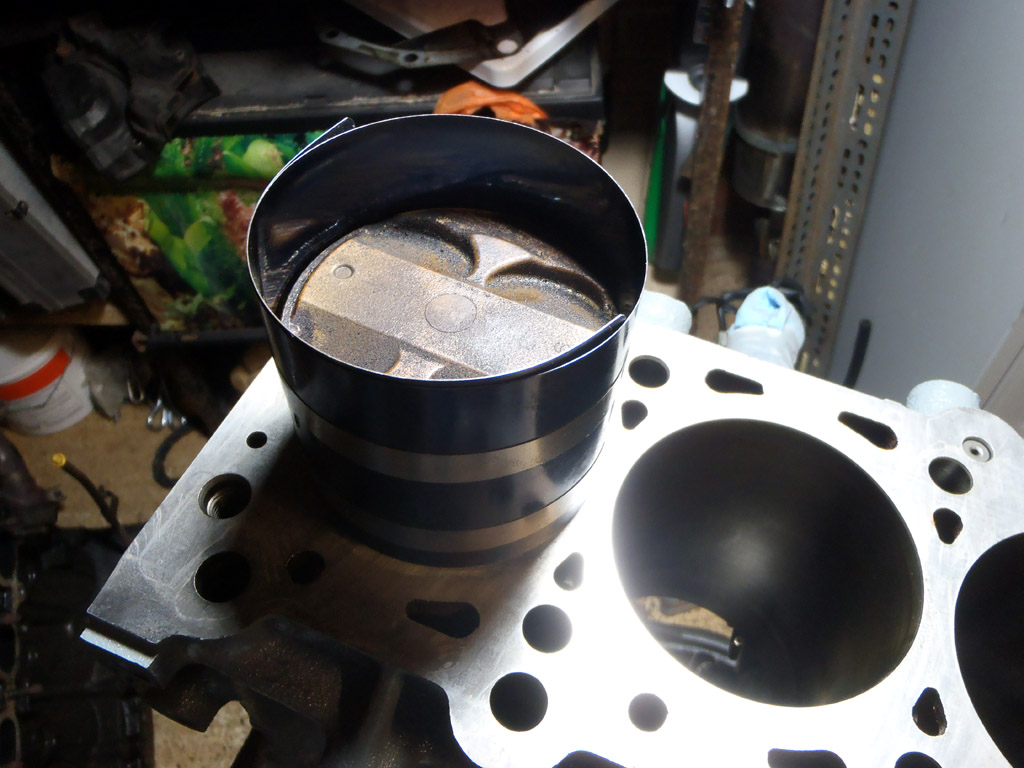
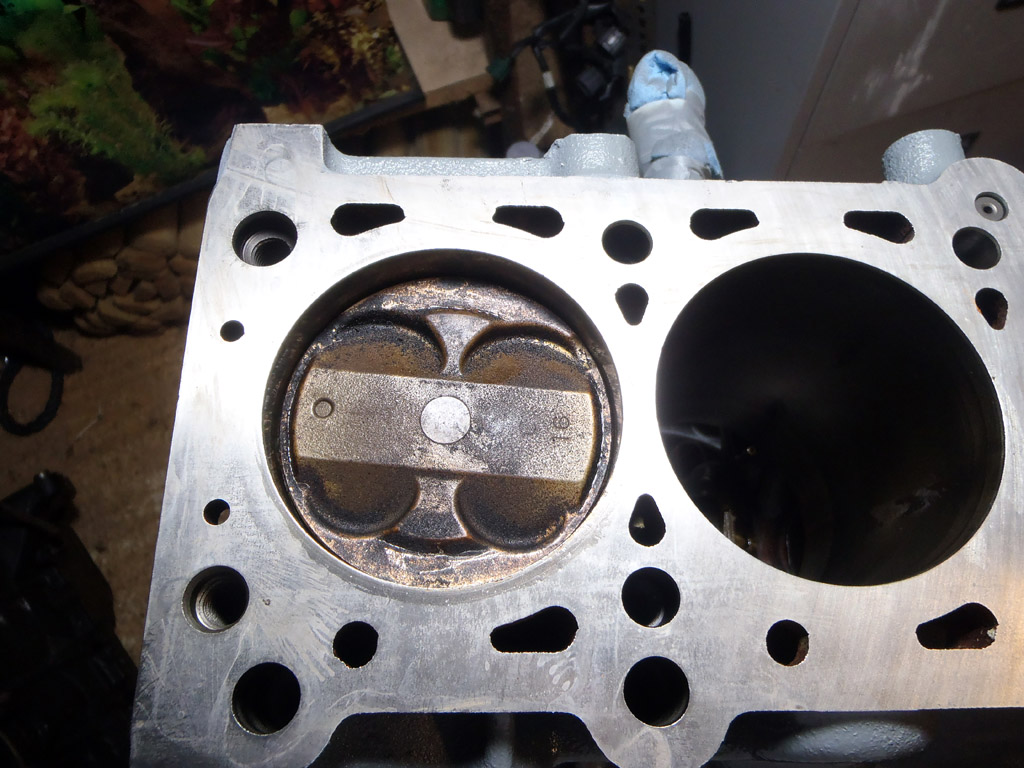
Then, ensuring there’s no gap between the tool and the block for the rings to pop back into, you gently tap the piston back in. I kept it all as vertical as possible to avoid scratching anything with the rod studs.

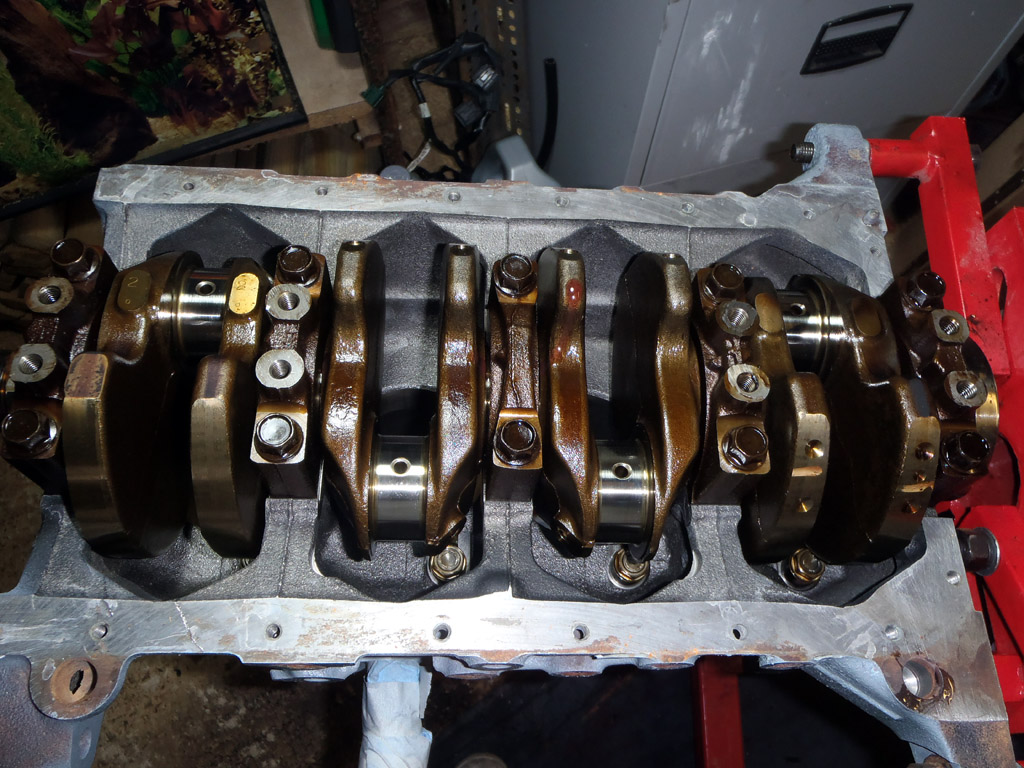
I flipped the block over, lubed up the crank and pushed the piston in further until the rod and crank were seated.

OLYMPUS DIGITAL CAMERA

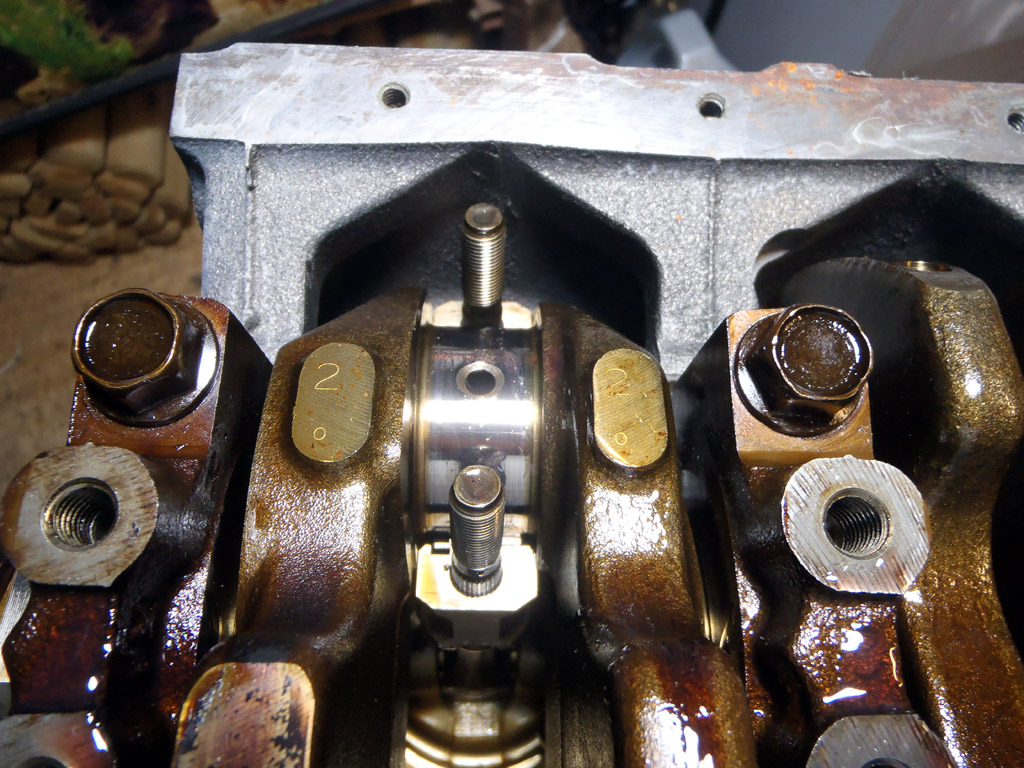
I lubed up the cap bearing and refitted that, torqueing it up. I double checked the diagonal mark to ensure they were the right way round.

Repeat 3 more times and…

Hopefully I’ll get a bit more done tomorrow morning. I think rear seal, oil pump, front seal and baffle/sump will complete the block (aside from sensors of course).

Posted in Performance upgrades | Leave a comment